
Does collected mean recycled?
A used cleaning bottle has not completed its journey when someone puts it in a collection container. For a buyer investigating what happens next, it helps to separate three questions: was the item collected, was the relevant material separated, and is there evidence of subsequent reprocessing? A record that answers the first question should not silently become an answer to all three. This guide offers an editorial method for asking better questions; it is not a certification scheme or a set of disposal instructions for a particular product.
There is a timely reason to look beyond the first destination. OECD's Monitoring trade in plastic waste and scrap 2026, published on 9 October 2026, examines trade data through 2024. Its methodological discussion explains that trade data do not establish the ultimate treatment route and may not distinguish a transit country from the final importer. That limitation concerns the dataset, not a verdict on a particular recycler. For a packaging enquiry, the practical lesson is to state what each record actually shows rather than treating movement as proof of a final outcome.
Start with the pack and the place
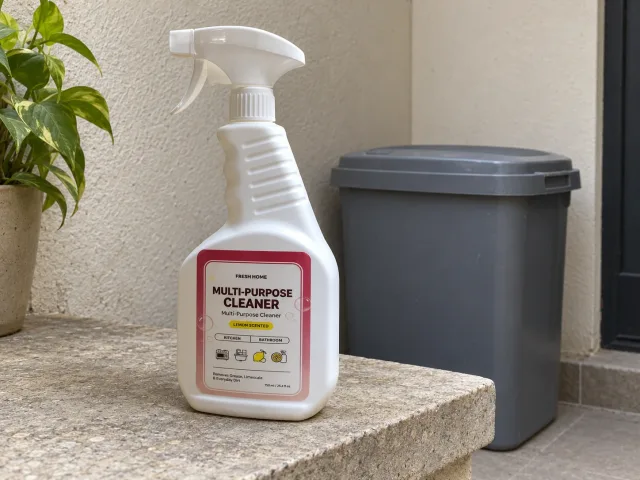
Choose one actual packaging version and one destination market before contacting a collection operator. Record a product code, a photograph and the available supplier description for the bottle, closure and label. Keep those components on separate lines. If the material of a component is unknown, write unknown; appearance and colour are not a substitute for its specification. Ask whether the proposed collection route covers this exact combination, rather than asking a general question about plastic bottles. A photograph can help identify the item, but it cannot establish its chemistry or local acceptance.
Next, identify where the packaging will arise. A household collection service, a shop's back room and a contracted commercial waste service are different enquiry settings; do not transfer an answer from one to another without checking. For Europe, specify the actual country and locality instead of assuming one continent-wide answer. For Canada, identify the province or territory and the relevant local service. Follow the product's own instructions and obtain appropriate local advice about remaining contents or damaged packaging. This article does not recommend rinsing, opening, separating or emptying a particular chemical container.
Ask a different question at each stage
At collection, ask the service to confirm which items it accepts, under what conditions and where its current guidance can be checked. Save the date and the scope of that answer. A collection receipt may be useful evidence that a service took custody of material, but review its wording before assigning any wider meaning. Does it identify a specific consignment, a mixed stream or only a service visit? If it describes a mixed stream, retain that qualification rather than attributing the entire recorded quantity to your packaging.
At sorting, ask which operation receives the stream and whether the operator can explain the next step for the components you identified. Then ask what evidence is available for onward treatment, including the time period and whether the information is site-specific or an aggregate estimate. You may not receive a traceable history for every individual bottle. That is a reason to describe the evidence at the level actually available, not to invent item-level tracking. If a broker or transfer site is the last named destination, record it as an intermediate point unless final treatment is independently established.
Try a simple evidence map
Imagine a distributor reviewing a proposed bottle pack for two local collection areas. In this fictional example, Area A provides written acceptance guidance and a collection receipt, while Area B supplies only a general statement that plastics are collected. Neither response, by itself, identifies the final reprocessing operation. The useful comparison is therefore between the questions answered, not between invented recycling rates. For Area A, the next question concerns the onward route. For Area B, first establish whether the actual pack and collection setting are covered by the statement.
Make a short worksheet with a row for each stage and columns for the responsible organisation, document date, exact scope and remaining question. Quote only the short wording needed to explain a limitation, and retain the original document internally. Mark an unanswered step as not established rather than failed: missing evidence does not prove that recycling did not occur. Equally, a confident general assurance does not fill a specific gap. If two responses conflict, return to the organisations with the same pack description and ask them to clarify the difference before summarising the route.
Use the result without overstating it
The map should help the product, packaging and local operations teams decide what to investigate next. It may reveal that the pack description is incomplete, that an answer covers the wrong locality, or that the available evidence stops at a transfer point. Those are actionable findings even when no recycling percentage can be calculated. Do not convert a waste-trade figure, collection total or unspecified recovery statement into a claim about this bottle. Avoid adding an environmental badge or changing disposal wording merely because the worksheet looks complete.
Before publishing consumer-facing instructions or environmental claims, ask a qualified person familiar with the destination market to review the actual wording and supporting evidence. Keep the worksheet linked to the packaging version and revisit it when the pack, service or documented route changes. Qiaoshou's catalogue can be a starting point for identifying a product under discussion; it is not proof of a downstream waste outcome. When asking about packaging, name the particular component and missing specification. A precise question is more useful than a broad request for a certificate that cannot answer it.
Article references
These general references support buyer checks. The importer remains responsible for confirming the rules that apply to the final formula, classification and destination market.