
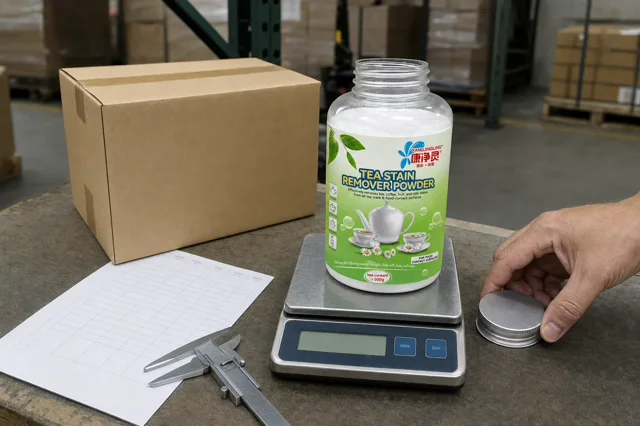
Start with the pack parts buyers can actually measure
Packaging EPR, retailer scorecards and import files can sound like legal work, but the first buying task is practical. Name each pack part and record the weight: bottle or jar, cap, label, inner bag if used, shipping carton, divider, tray and any shrink film or sleeve.
Do this while the real sample is on the table. A PDF dieline may show artwork space, but it will not confirm the actual cap weight, jar weight, carton board route or whether a divider is still needed after the packing plan changes.
Connect packaging data to the SKU map
A small tea stain remover jar, a laundry detergent bottle and a trigger-spray degreaser do not create the same packaging file. The buyer should connect every pack-weight note to a clear SKU name, net content, carton quantity and private-label version.
This prevents a common mistake. The label may use the retail product name, the carton may use a warehouse short name and the packing list may use an older factory name. If the packaging data sits under the wrong name, it becomes hard to match later.
Ask for weights before cartons are printed
Carton marks often move faster than the packaging data. Pieces per carton, gross weight, net weight, carton size and any material note should be reviewed before carton printing. If the cap, jar, bottle, label material or divider changes, the carton data may also need another look.
For mixed cleaning-product orders, keep the file simple. One row per SKU is usually enough at the quotation stage: product name, pack format, net content, cap or closure, label version, pieces per carton, carton mark name and packaging parts that still need confirmation.
Confirm the required packaging data
Ask the importer or responsible local team which packaging data fields are needed for the destination market. Record those requirements against the selected SKU and pack revision; a sample photo does not establish compliance.
A safer routine is to collect clean pack data first. The importer, local agent or retailer can then review the numbers against the destination-market requirement. Qiaoshou can help keep the product, label, carton and common export documents aligned with the buyer brief.
Keep label claims separate from material records
Words such as refill, recyclable, eco, PCR or reduced plastic need more care than ordinary product naming. If a buyer wants that wording on a cleaning product pack, list the exact pack part, proposed wording, evidence owner and label location before artwork approval.
Do not let a broad claim replace the material record. The file should still say which bottle, cap, jar, carton or label is being discussed, and whether the claim belongs on the consumer label, carton mark, sales sheet or internal order file.
What to send Qiaoshou for a packaging data review
Send the destination market, sales channel, product list, net content, pack format, label language, private-label artwork status, carton quantity, pack-weight fields requested by your retailer or local team, expected order quantity and required document list.
With that brief, Qiaoshou can review the sample pack, carton route, label space and common documents together. The quotation then follows the packaging file the buyer needs to approve, not only the unit price of the cleaner.