
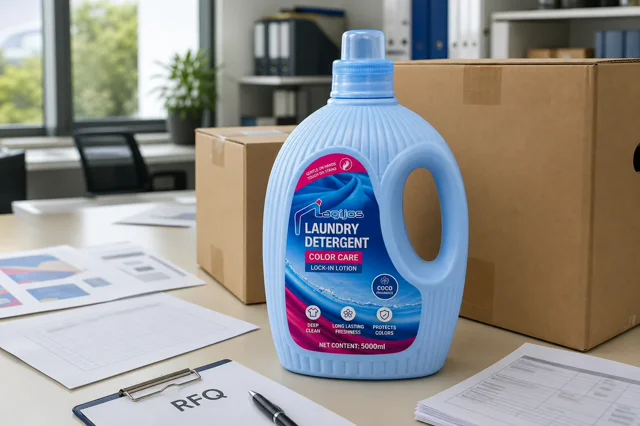
Start the RFQ with the buying project, not one unit price
Many cleaning product inquiries start with a short message: please quote your best price. That is quick to send, but it usually leaves out the details that decide the real cost, sample route and production plan.
For importers, distributors and private-label buyers, a better RFQ explains the product type, destination market, sales channel, target pack size, label language, carton requirement and document needs. The supplier can then quote against the same project the buyer actually plans to ship.
Define the product and shelf role first
The RFQ should name the product clearly: laundry detergent, drain cleaner, kitchen degreaser, toilet cleaner, tea stain remover or hand washing powder. It should also say whether the SKU is for a supermarket shelf, wholesale bundle, discount channel, e-commerce pack or a wider private-label range.
That context changes the discussion. A laundry detergent family bottle needs different label space, carton count and sample checks than a drain cleaner bottle or a trigger-spray kitchen degreaser. If the buyer is testing several SKUs in one container, say that before the supplier prepares the first quotation.
Send packaging and label details before artwork starts
Packaging details belong in the first RFQ. Include net content, bottle or jar preference, cap or trigger direction, carton count if fixed, barcode needs, importer information, label language and whether the buyer already has artwork.
Claims and warnings should be marked early as well. The buyer should review words such as antibacterial, eco, professional strength or certified against the target market and retailer requirements before they appear in final artwork. Qiaoshou can discuss label and carton customization, but the buyer should decide which claims and warnings need support.
Make carton marks and shipment handling visible
Carton marks are easy to ignore until the goods reach a warehouse. A practical RFQ should say whether cartons need product name, SKU, quantity, gross weight, net weight, carton number, barcode, destination mark, language or pallet information.
This matters most for mixed shipments. If laundry detergent, degreaser and drain cleaner share one container, the packing list and carton marks should help the importer separate SKUs without opening every carton. Clear carton information also helps the supplier confirm packing before production.
List sample checks and documents in the same email
A useful sample request should explain what the buyer will check: appearance, fragrance, cleaning feel, bottle handling, cap closure, leakage risk, label fit, carton strength, barcode placement or document availability. That avoids a sample that looks nice but does not answer the buyer's real questions.
Common document discussions include SDS or MSDS, COA, ingredient declaration, commercial invoice, packing list and carton marks. The exact set depends on product, formula route, destination country and buyer channel. Ask early, while formula, packaging and label details can still be reviewed together.
A practical RFQ checklist to send Qiaoshou
Send product type, destination country, sales channel, target order quantity, pack size, label language, artwork status, claim direction, carton requirement, sample checks, document list, shipment term and any retailer-specific rule.
With those details, Qiaoshou can review the product fit, packaging route, sample plan, carton marks and export paperwork as one sourcing project. The quotation will be clearer, and both sides can spend less time correcting assumptions after the first price is sent.