
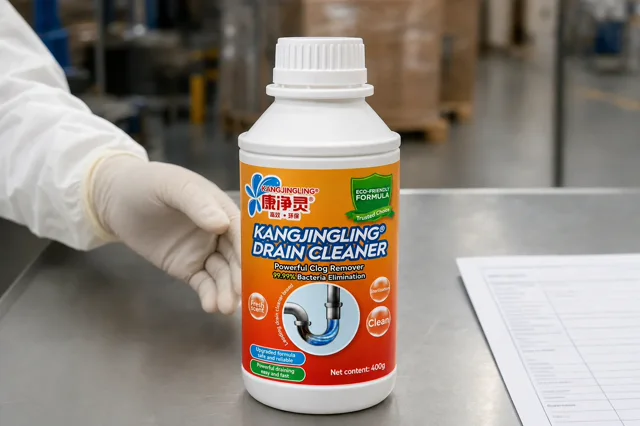
Review the ingredient declaration before the label is treated as final
Drain cleaner is a small SKU with a lot of buyer risk packed onto one bottle. The front label, back label, warning text, usage directions, importer details and barcode all compete for space. If the ingredient declaration is requested after artwork approval, the buyer may discover that the wording, document name or local-language space no longer matches the pack being printed.
A cleaner workflow is to ask for the ingredient declaration discussion during RFQ. The supplier can then review the formula route, bottle size, cap, label layout, carton marks and export files as one order package instead of fixing each item separately at the end.
Connect ingredient notes with warning and usage copy
Ingredient information should not sit in a separate folder while the label team writes the warning panel by memory. For drain cleaner, the buyer should check whether the label has enough room for use instructions, caution wording, storage notes, importer information and local language.
This is not a promise that one wording fits every market. It is a practical approval step. The importer, local agent or retailer may still need its own review, but the supplier brief should give them a cleaner file to check.
Ask which files need the same product name and SKU wording
A common mistake is letting the bottle label, carton mark, packing list, commercial invoice, SDS or MSDS, COA and ingredient declaration describe the same drain cleaner in slightly different ways. One file may use a private-label product name, another may use a factory item name, and the carton may use a shorter warehouse code.
That can slow down customs checks, retailer intake or internal warehouse receiving. Buyers should agree on the product name, SKU code, net content, carton quantity, language version and shipment mark before print files and order documents are closed.
Check the bottle sample with the document list beside it
A physical sample tells the buyer more than a PDF artwork file. Hold the bottle, open and close the cap, check whether the label wraps cleanly, and look at how much blank area remains for local wording or importer details.
Put the document checklist beside that sample. If the destination market needs SDS or MSDS, COA, ingredient declaration, commercial invoice, packing list, barcode position or retailer files, list them while the sample is still being reviewed.
Use the same check for private-label and distributor orders
Private-label buyers usually have more artwork control, but they also carry more responsibility for wording, language and shelf presentation. Distributor orders may keep more of the supplier label, yet still need importer details, carton marks and document files that match the local channel.
Either way, the RFQ should say where the product will be sold, what language the label needs, whether the buyer has its own artwork, and which files the buyer wants before shipment. A short, clear brief prevents the quote from becoming only a bottle price.
What to send Qiaoshou for a drain cleaner document review
Send the drain cleaner size, destination country, sales channel, target label language, private-label status, artwork file if available, carton mark requirement, shipment term and requested document list.
With that information, Qiaoshou can discuss the drain cleaner sample, label route, carton plan and common export documents together. The buyer gets a more usable order file before bulk printing and packing begin.