
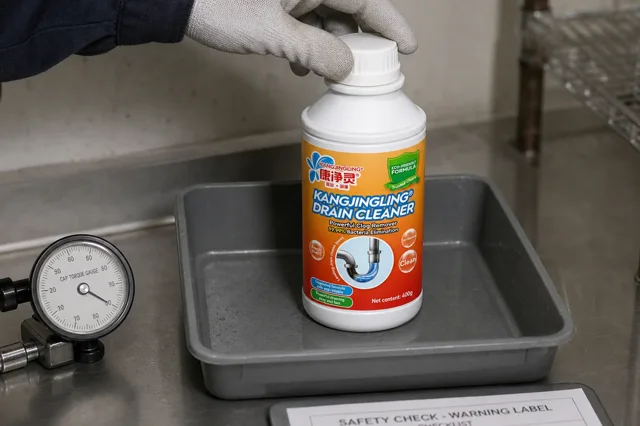
Start with the cap, not the front label
A drain cleaner bottle can look ready for retail while the most important part still needs checking: the closure. For importers and supermarket buyers, the cap is part of the product file because it affects handling, leak risk, shelf confidence and the space left for warning copy.
The first sample review should be practical. Hold the bottle, open and close the cap, check whether the neck feels clean, confirm the bottle stands upright and record any leakage after normal handling. Do this before treating the artwork as approved.
Use customer questions to shape the warning panel
Customer questions around drain cleaner are usually direct: how do I use it, what should I avoid mixing it with, where should I store it, and what should I do if it spills? The label needs enough room for the market-specific answer that the buyer can support.
Do not crowd that answer behind marketing copy. Keep space for product name, use directions, caution wording, first-aid or storage language where required by the buyer, net content, barcode, importer details, batch field and local language. The final wording depends on the destination market and buyer review, but the space must be planned early.
Check leak behavior in the same position used for shipping
A simple leak check catches problems that a flat product photo cannot show. Place the drain cleaner sample upright in a tray, handle it like a receiving team would, and note cap tightness, bottle deformation, label edge lift and any residue around the neck.
If the buyer changes the cap, bottle size, label material or carton orientation later, repeat the check. The sample file should say which physical pack was reviewed, not only which design file looked acceptable on screen.
Keep carton marks tied to the retail pack name
Drain cleaner is often shipped with other household cleaners. If the carton mark says one name, the label says another and the packing list uses a factory short name, the buyer's warehouse has to solve the mismatch after the goods arrive.
Before carton printing, align product name, net content, pieces per carton, batch or lot field, destination mark, barcode or retailer code and any handling note. The receiving team should be able to match the carton, bottle and document folder without opening every case.
Review documents before the warning label is locked
Common drain cleaner files may include SDS or MSDS, COA where applicable, ingredient notes, label artwork, carton-mark approval, commercial invoice and packing list. The exact set depends on destination country, sales channel and buyer requirements.
The useful habit is simple: keep the document names close to the final retail-pack wording. If the label, carton and SDS or MSDS describe the product differently, fix the mapping before bulk packing instead of leaving it for customs, retailer intake or the warehouse team.
What to send Qiaoshou for a drain cleaner pack review
Send the destination market, sales channel, bottle size, cap or closure requirement, label language, warning wording under review, private-label artwork status, carton requirement, expected order quantity and requested document list.
With that brief, Qiaoshou can review the drain cleaner bottle, cap, label space, carton marks and common export documents together. The quotation then reflects the pack the buyer plans to receive and sell, not only the liquid price.
Official reference sources
These general references support buyer checks. The importer remains responsible for confirming the rules that apply to the final formula, classification and destination market.