
Start with the catalogue reference, then define the decision
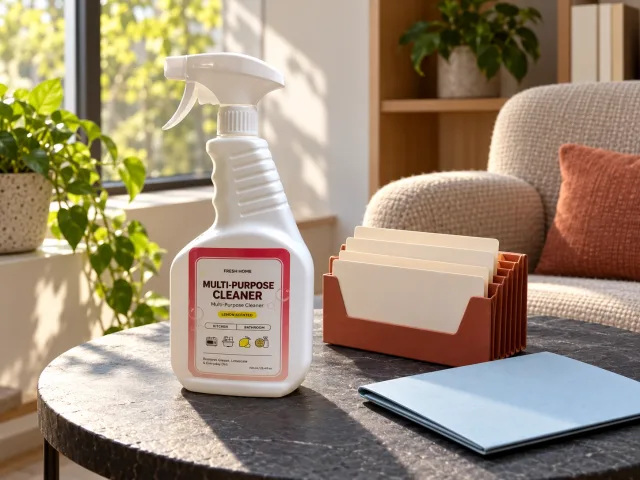
A useful sample request tells the supplier what the buyer needs to decide. For Fresh Home, the catalogue starting point is a 750 ml trigger-spray multi-purpose cleaner with lemon-scented positioning on the current sample. That gives a purchasing team a reference to discuss, not a finished private-label specification. Ask the supplier to identify the proposed sample and explain which details match the catalogue item and which are still open. Keep the bottle size, product reference and requested market in the same brief so that a conversation about fragrance does not drift into an assumption about a different formula or pack.
The OECD’s August 2026 nine-country preference study concerns avoiding skin flare-ups, not testing Fresh Home or measuring cleaner demand. For this purchasing brief, keep the practical question narrow: what fragrance direction does the buyer want the supplier to investigate? A description such as a restrained lemon character expresses a preference. It does not establish a claim such as gentle on skin, hypoallergenic or suitable for sensitive skin. Those proposed statements belong in a separate evidence review. Give each open question an owner and a requested response so that the supplier can address the fragrance brief without leaving the evidence questions implicit.
Turn scent preferences into a brief the supplier can answer
Replace a request for a pleasant fragrance with a short set of explicit choices. Record whether the buyer wants to retain the catalogue’s lemon direction or ask about another direction, whether the intended character should feel crisp or rounded, and whether the desired impression is discreet or pronounced. Describe any desired persistence as a preference to discuss, rather than a measured performance promise. Add the intended sales channel, destination country and label language, since the same internal shorthand may be interpreted differently by a distributor, a designer and a supplier. Ask for written confirmation of which options can actually be offered.
Make the response easy to compare by using one line for each preference and three answer fields: requested direction, supplier proposal and unresolved point. For example, a buyer can ask for a discreet lemon profile while leaving the exact fragrance identity pending. The supplier can then confirm feasibility or propose a different direction without making an implied promise about safety. Keep a reason beside each preference, such as consistency with the buyer’s existing range or a retailer’s written brief, when that reason is known. Do not present an individual preference as evidence of demand across a country or customer group.
Keep formula identity and proposed claims in separate records
A fragrance description is not enough to identify the sample that will support later purchasing decisions. Request a sample code and the supplier’s formula version or other controlled formula reference, together with the date and the person responsible for the response. Ask how the proposed fragrance is linked to that formula reference and how a later change will be communicated. A buyer does not need to invent an internal chemistry specification to do this. The immediate aim is traceability: everyone reviewing the sample, label text and quotation should be able to tell whether they are discussing the same proposed product.
Use a separate claim record for any wording that goes beyond an ordinary scent description. Copy the exact proposed statement, identify where it would appear, and ask what evidence could support it for the selected formula and intended market. Record the evidence request as pending until the relevant material has been supplied and reviewed by the responsible people. A favourable fragrance preference does not close that request. Nor should label wording or a catalogue photograph be treated here as verified proof of cleaning efficacy or skin safety. This separation helps purchasing and artwork teams see precisely which decisions remain unfinished.
Close the sample brief with a versioned decision
Before arranging a sample, send the supplier the target quantity, destination, label language, fragrance direction and required documents. Confirm the final formula and fragrance options rather than assuming that the catalogue reference fixes either. Ask which SDS or MSDS, ingredient declaration and COA information can be provided for the proposed specification, and record the scope of the answer. The catalogue leaves sample timing dependent on agreed formula, fragrance, market and packaging direction. MOQ also depends on the selected bottle, formula, label and carton requirements. Keep these commercial questions visible so that a promising fragrance discussion does not become an unsupported delivery commitment.
When a decision is eventually made, record exactly what was accepted, by whom and on what date, with the sample code and formula version attached. A fragrance preference decision should say that it covers the fragrance direction; formula acceptance, evidence review and artwork approval need their own recorded outcomes. If the supplier changes the fragrance or formula reference, reopen the affected decisions instead of carrying the old approval forward automatically. Assign an owner to each outstanding question and specify the response needed to move it forward. The next useful step is an identified sample request with open questions clearly marked, followed by a quotation for the confirmed specification.
Article references
These general references support buyer checks. The importer remains responsible for confirming the rules that apply to the final formula, classification and destination market.