
What should a buyer ask after the standards update?
Ask how the supplier manages change and what evidence you can review. ISO announced ISO 9001:2026 on 16 September 2026. BSI’s separate announcement that day highlights controlled planning, implementation and evaluation of changes. Those announcements provide a useful reason to revisit a supplier conversation, but they do not answer the questions about a particular factory, certificate or cleaner. This buyer brief proposes a practical review process. It does not interpret individual clauses, set a transition deadline or say that a supplier’s existing certificate has become invalid. The cited sources are linked below so your quality team can examine their actual scope.
For a European importer or private-label buyer, start by deciding what you need this conversation to establish. You might want to understand how a supplier assigns responsibility when its inspection-record workflow changes, or how an unresolved issue reaches the person authorized to decide on it. Keep that objective separate from a product sample assessment. A well-presented bottle and a complete certificate file can each be useful, but they answer different questions. Write the purchasing question at the top of your review sheet so the discussion does not drift into an exchange of logos and general assurances.
Which certificate details belong in the review sheet?
If a supplier offers a quality-management certificate, request a readable copy and record exactly what it says: organization name, site address, standard edition, stated scope, certificate identifier, issuer and dates. Compare the named organization and site with the party involved in your proposed order. If a trading company introduces a manufacturer, ask which entity the document actually covers and who can explain that relationship. Preserve any unanswered point as an open question rather than filling it in from a familiar brand name. Where confirmation is needed, use the issuing body’s genuine verification route or ask your quality team to check it.
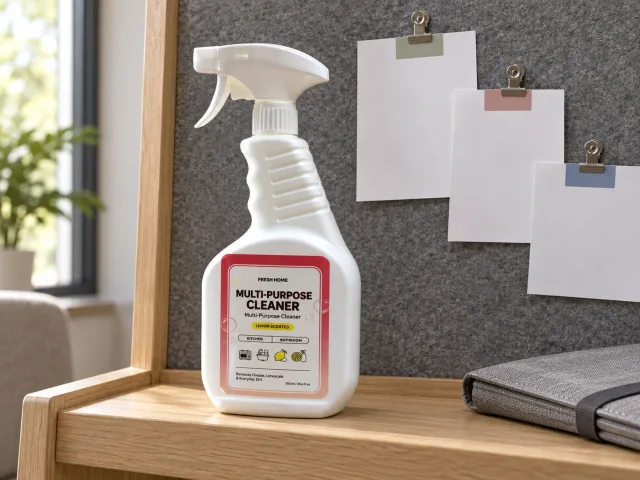
Do not silently expand the document’s scope. A reference to a management system should not be rewritten in your sourcing file as evidence that every individual cleaner, formulation or shipment has been approved. Ask separately for whatever product-specific evidence your intended use and destination require, and have the responsible importer or compliance adviser assess those requirements. This article does not establish that Qiaoshou holds a particular certificate. Its catalogue image is an illustration only. In your own review, distinguish a certificate you have actually checked from a statement made in an introductory email or a badge copied onto a sales presentation.
How can one change example make the conversation useful?
Choose a process example that the supplier can explain without sharing another customer’s confidential information. A move from one inspection-record workflow to another is a useful starting point: it lets you discuss responsibility, document versions and follow-up without asking for a secret formula. Ask why the change was proposed, who owned it, which activities might be affected, who approved implementation and how the relevant people learned to use the revised process. These are suggested purchasing questions, not a quotation of required standard clauses. If the supplier cannot share an original record, discuss whether a suitably redacted example would answer your question.
Then follow the example beyond approval. What shows that the revised workflow was actually used? How was an obsolete form kept from being mistaken for the current one? Who checked whether the change achieved its intended result, and where were remaining problems recorded? A response can be concise and still be traceable if it identifies the records and responsible roles. Conversely, a large folder of documents may leave the sequence unclear. Record the evidence you saw, the explanation you received and any follow-up needed in separate fields. Do not describe an example as verified merely because it looked plausible during a call.
How should the review lead to a sourcing decision?
Turn the discussion into a short action list for your purchasing and quality colleagues. Useful fields include the stated certificate edition and scope, the example’s change owner, its reason, the impact considered, approval evidence, implementation record, follow-up result and unresolved question. Add a named owner and an agreed response date for each outstanding request. Keep the original supplier document alongside your notes so a later reviewer can see what was provided and what was your interpretation. When comparing suppliers, use the same questions while allowing for different organizational structures; the purpose is a clear answer, not identical paperwork.
Connect the result to the next step you actually intend to take. You may be ready to request product documentation, arrange a sample discussion or ask for clarification before considering commercial terms. Do not use completion of this sheet as an automatic approval of a cleaner or a shipment. For a Qiaoshou enquiry, identify the product you are considering, the European destination, your purchasing role and the specific documents or process questions you want addressed. The Fresh Home multi-purpose cleaner shown here can identify a catalogue discussion; it does not prove performance or certification. Keep any later product evaluation and importer review within their own evidence-based decision process.
Article references
These general references support buyer checks. The importer remains responsible for confirming the rules that apply to the final formula, classification and destination market.