
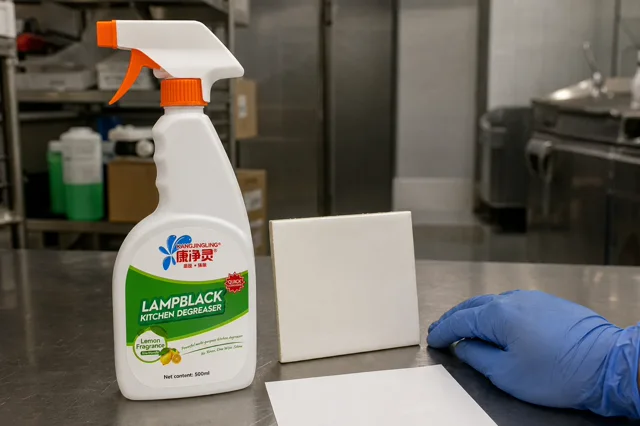
Say which kitchen surface the label is talking about
People search for kitchen degreaser questions in a very practical way: can it be used on cabinets, hoods, stovetops or tiles, and what should the label say before someone sprays it? Importers and private-label buyers have the same problem at order level. The product name may say kitchen degreaser, but the label still has to explain the intended use clearly.
A buyer should decide the main surface story before artwork starts. A retail SKU for range hoods may need different directions from a daily kitchen spray. A supermarket line may need simple household wording. A distributor selling into restaurant back rooms may care more about trigger handling, carton protection and document files.
Do not let broad claims replace directions
Words such as powerful, quick degreasing, lemon fragrance or multipurpose can help the front label, but they do not replace use directions. The back panel still needs room for where to spray, whether to wipe or rinse, what surfaces are included, what surfaces need caution, storage notes and local-language warnings.
This is not a legal conclusion for every market. It is a buyer-side approval habit. Before print files are locked, importers should ask their local agent, retailer or internal compliance team which directions and caution wording must appear on the final label.
Check the trigger bottle as part of the label review
Kitchen degreaser often uses a trigger bottle because buyers expect easy application on vertical kitchen surfaces. That makes the trigger a packaging decision, not a small accessory. The sample check should include grip, spray direction, neck fit, closure, leakage in carton and whether the label remains readable when the bottle is held in use.
The front label should be reviewed from shelf distance. The back label should be reviewed in hand. If the bottle shape curves around the label, do not approve the artwork only on a flat PDF. Print a sample label or ask for a sample bottle so the team can see barcode position, warning space and importer details in the real pack shape.
Match cabinet and surface questions with buyer documents
Consumer questions around kitchen cabinets and grease removal are useful because they show where confusion starts. A buyer does not need to turn the label into a long manual, but the RFQ should say which surfaces the product is expected to address and which surface wording should be reviewed before printing.
Keep the same product name, SKU code, net content and use description across the label, carton mark, packing list, commercial invoice, SDS or MSDS, COA and ingredient notes. If the label says one use case and the document file says another, the buyer usually discovers it late.
Review carton packing before approving a spray SKU
Trigger bottles need protection in transit. Buyers should ask how many bottles go in a carton, whether trigger heads need separators or orientation control, how carton marks identify the SKU, and whether mixed cleaning-product shipments need clearer packing list names.
A kitchen degreaser may ship with drain cleaner, toilet cleaner, tea stain remover, laundry detergent or hand washing powder in one order. The carton plan should help the warehouse identify the product without opening every box. That saves time during receiving and reduces artwork or carton mark corrections later.
What to send Qiaoshou for a kitchen degreaser label check
Send the target market, sales channel, bottle size, trigger requirement, intended kitchen surfaces, fragrance direction, label language, artwork status, carton packing requirement, shipment term and requested document list.
With that brief, Qiaoshou can review the grease remover sample, label directions, trigger packaging, carton marks and common export documents together. The quotation becomes tied to the product buyers plan to sell, not only to a bottle price.
Official reference sources
These general references support buyer checks. The importer remains responsible for confirming the rules that apply to the final formula, classification and destination market.