
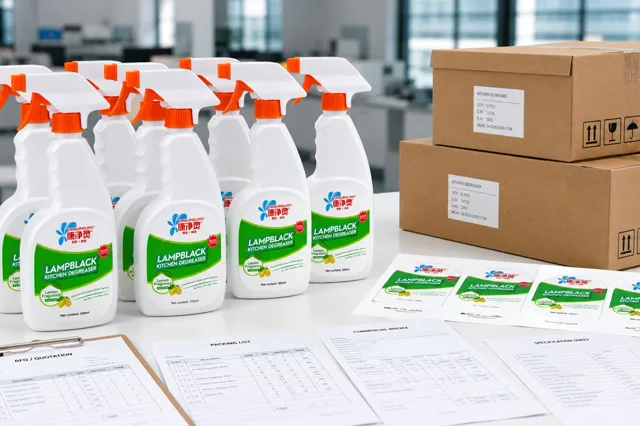
Start with the grease problem, not only the bottle size
Kitchen degreaser sounds like a simple product, but wholesale buyers often compare very different use cases under the same name. A degreaser for home kitchens, supermarket shelves, restaurant back-of-house cleaning or value wholesale channels may need different fragrance, foam feel, spray pattern, label language and carton plan.
Before asking for the lowest unit price, the RFQ should explain where the product will be sold and what type of grease problem it is meant to solve. That helps the supplier discuss formula direction, bottle format, sample target and document needs with fewer revisions.
Define the target use case clearly
A practical brief should say whether the buyer needs kitchen stove degreasing, range hood cleaning, general hard-surface cleaning or a daily household cleaner with stronger oil-removal positioning. These details affect claim wording, fragrance choice and how the product should feel during use.
Buyers should avoid broad claims that are hard to support across markets. Words such as heavy duty, professional, antibacterial or eco may require local review or retailer approval. It is safer to keep the first brief specific: kitchen grease, oily surface, cooking residue, fast rinse or daily kitchen cleaning.
Choose the bottle, trigger and cap route early
For kitchen degreaser, packaging is part of product performance. A trigger spray can make the product easier to use on vertical surfaces, but the trigger, neck, closure and carton packing need leakage checks. A cap bottle may be better for value channels or refill-style sales, but the usage instruction must be clear.
The RFQ should include target net content, bottle shape, trigger or cap preference, carton count and whether the product will be shipped as one SKU or mixed with other cleaning products. This prevents late changes after label and carton artwork have already started.
Review label claims before artwork starts
Supermarket buyers usually care about how quickly the front label communicates the use case. The product name, grease-removal message, fragrance note, net content and key warning area should be readable at shelf distance.
The back label needs enough room for usage directions, caution text, ingredient information, importer details, barcode placement and local language. If the destination market needs bilingual or Arabic labels, that should be known before the artwork is locked.
Check carton packing, leakage and shelf handling
Kitchen degreaser orders can create avoidable problems when bottle choice, trigger protection, carton dividers, carton marks or pallet handling are not discussed early. A product may look acceptable as a single sample but still need packing review for container shipment and retail warehouse handling.
Buyers should ask how samples will be evaluated: appearance, fragrance, spray feel, cleaning performance, leakage after handling, label fit and carton information. For mixed containers, carton marks and packing lists should match the SKU plan exactly.
Documents and RFQ details to confirm
Common document discussions include SDS or MSDS, COA, ingredient declaration, commercial invoice, packing list and carton marks. The required set depends on formula, destination country, buyer channel and retailer expectations.
A complete kitchen degreaser RFQ should include destination market, sales channel, target pack size, bottle or trigger preference, fragrance direction, label language, private-label artwork status, target quantity, carton requirement, shipment term and document list. With these details, Qiaoshou can review product, packaging and export paperwork together instead of quoting a bottle in isolation.