
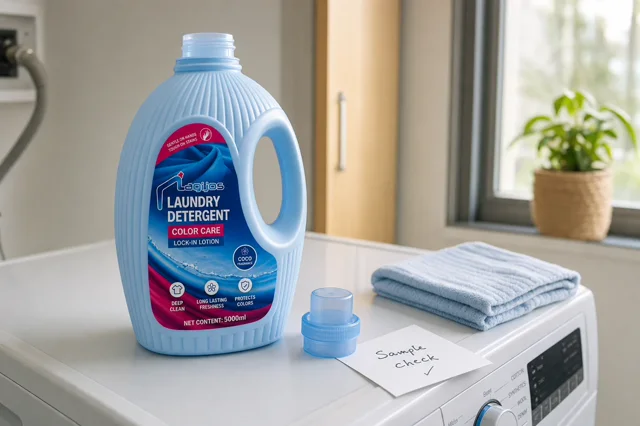
Check how the buyer will measure and pour the detergent
Laundry detergent samples are often judged by fragrance, color and front label first. Importers should also test the part shoppers touch every week: the cap. A dosing cap that looks acceptable in a photo can still be hard to read, easy to spill or awkward to close after use.
For a private-label detergent order, the sample review should cover cap fit, visible fill lines, pour control, handle comfort, label space, carton protection and the documents needed for the destination market. Those points belong in the RFQ before artwork is treated as final.
Test the cap with the bottle, not as a separate accessory
Use empty or inert-filled packaging to review cap fit, grip and the visibility of dosing marks. Verify dosage wording against supplier-approved directions for the selected formula; any filled-product or closure-performance test needs a qualified procedure.
This check matters more for family-size bottles and value channels. Larger bottles need a handle and cap combination that feels stable when the bottle is partly full. If the buyer plans several fragrances or pack sizes, the cap direction should still feel consistent across the range.
Make dosage directions readable before label approval
The label needs room for more than a large product name. Laundry detergent packaging often needs dosage guidance, use steps, caution text, net content, fragrance direction, barcode placement, importer details and local language. If those details are added late, the label can become crowded or move onto a difficult curve of the bottle.
Private-label buyers should send the sales channel, destination country, label language and artwork status while samples are still being reviewed. Qiaoshou can then discuss whether the current bottle and label area match the buyer's retail or wholesale plan.
Include leakage and carton handling in the sample check
A detergent bottle can pass a tabletop review and still create problems in a carton. Check cap tightness, neck condition, label alignment, bottle scratches, carton divider needs and whether cartons protect the closure during handling. If detergent ships with drain cleaner, degreaser or toilet cleaner, carton marks should keep SKUs easy to separate.
The carton plan should state product name, SKU, quantity, gross weight, net weight, carton number, barcode or destination mark when needed. Warehouse teams should not have to open every carton to know which detergent fragrance or bottle size arrived.
Ask for documents while the sample is still under review
Common detergent document discussions include SDS or MSDS, COA, ingredient declaration, commercial invoice, packing list and carton marks. The exact set depends on formula route, fragrance, destination market and buyer channel.
If fragrance direction, dosage wording, bottle size or label language changes after the sample is approved, the related documents may also need review. It is easier to correct this while the order is still at sample stage than after cartons are packed.
What to send Qiaoshou for a dosing-cap sample review
Send destination country, sales channel, target bottle size, order quantity, fragrance direction, cap or dosing preference, label language, artwork status, carton requirement, sample test notes, shipment term and required documents.
With that brief, Qiaoshou can review the laundry detergent sample as a product, package and export order together. The buyer gets a quotation tied to the real selling plan, not just a nice-looking bottle photo.