
Why the packaging brief should come before the price request
Many laundry detergent RFQs start with one short question: what is the price for a bottle? For importers and private-label buyers, that is usually too early. The useful quotation depends on the SKU role, bottle size, cap direction, label language, carton count, shipment plan and documents required by the destination market.
Include any proposed refill format, dosing feature or packaging-reduction objective in the brief. Review its effect on shelf layout, carton handling, label space and the sample evidence needed before approval.
Define the shelf role of each detergent SKU
A value family bottle, a fragrance-led daily detergent and a refill-supported range should not be briefed in the same way. The buyer should first decide whether the detergent is for supermarket shelf display, wholesale bundles, a private-label starter SKU or a wider household cleaning range.
That choice influences net content, bottle shape, handle comfort, color direction, front-label hierarchy and how the product sits beside drain cleaner, grease remover, toilet cleaner or other cleaning products in the same container or retail program.
Confirm bottle, cap and refill direction early
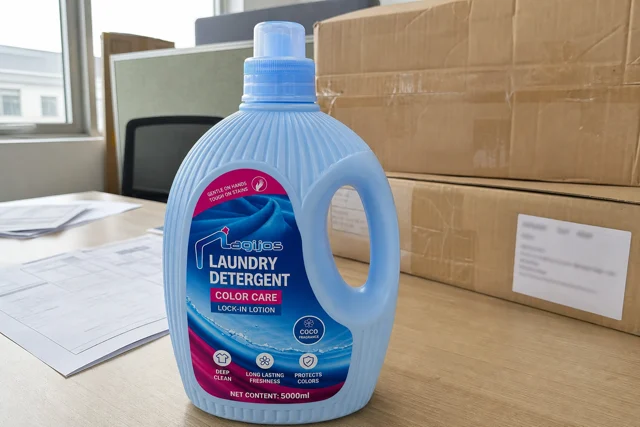
For liquid detergent, the packaging decision usually includes bottle size, cap or dosing-cap preference, label area, handle style, carton count and whether the buyer wants a refill story later. These details should be discussed before artwork starts because they affect label layout and carton packing.
If the buyer expects refill pouches, larger family packs or multiple fragrances in the future, it is better to say so during the first RFQ. A supplier can then review whether the first SKU leaves room for a consistent range rather than becoming an isolated one-off product.
Write label claims that can survive review
Laundry detergent labels often need short selling points, but broad claims create unnecessary risk. Words such as eco, antibacterial, baby safe, professional strength or certified should not be added unless the buyer has the supporting review for the target market and retail channel.
A safer label brief describes the intended use: daily washing, color care, fragrance direction, family-size value or fabric-care positioning. The supplier can then align the front label, back label, caution text and document wording more clearly.
Treat cartons and shipping marks as part of the product
The carton is often where import problems become visible: unclear shipping marks, mixed-SKU confusion, barcode mismatches, leakage after handling or carton language that does not match warehouse requirements. These details are not minor afterthoughts for detergent shipments.
A useful packaging brief should state pieces per carton, carton dimensions if fixed, barcode needs, shipping marks, importer label requirements, pallet or container handling expectations and whether the detergent ships alone or with other household cleaning products.
List document needs while the formula and label are still flexible
Importers commonly discuss SDS or MSDS, COA, ingredient declaration, commercial invoice, packing list and carton marks for detergent orders. The exact document set depends on formula route, fragrance, destination country, label language and channel requirements.
These items should be part of the RFQ, not a request made after production. If bottle size, fragrance, warning text, claim wording or label language changes late, the document wording and carton information may need to be checked again.
What to include in the RFQ sent to Qiaoshou
A complete laundry detergent RFQ should include destination market, sales channel, target bottle size, quantity by SKU, fragrance direction, label language, artwork status, cap or dosing preference, carton requirement, shipment term and required documents.
With that information, Qiaoshou can review product fit, private-label packaging, sample plan and export paperwork together. The result is a quotation that reflects the real buying program, not just a unit price for an unfinished bottle concept.