
Start with the exact part that carries the claim
PCR, recycled content and refill wording are easy to say in a buying meeting. They are harder to manage when nobody has named the exact packaging part. For a laundry detergent SKU, the claim may refer to the bottle body, cap, refill pouch, outer carton or a shelf-ready tray. Those are different checks.
A buyer should not ask only for a green packaging price. The RFQ needs to say which pack part is being discussed, what wording may appear on the label, which market will receive the goods and who will review the evidence before artwork is locked.
Keep recycled-content wording out of the artwork until the file is ready
A label can run out of space quickly. Product name, dosage, warning copy, net content, fragrance, barcode, importer details and local language already compete for the same panel. If PCR or recycled-content wording is added late, the back label often becomes crowded or unclear.
Before printing, buyers should list the exact wording they want to use and the proof or local review the sales channel expects. This is not about banning the claim. It is about making sure the label, order file and retailer conversation all describe the same packaging route.
Check the bottle sample with material notes beside it
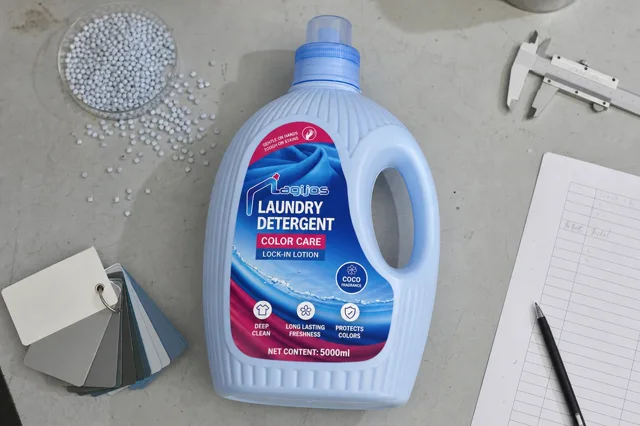
The physical bottle still matters. Hold the laundry detergent sample, check the handle, cap fit, label wrap, fill level, barcode position and carton orientation. Then compare those observations with the packaging material notes and the claim language under discussion.
If the bottle shape changes, if the cap supplier changes or if a refill pouch is added later, the claim file may need another review. A simple sample table helps: pack part, material note, proposed claim, proof owner, label location and carton impact.
Connect packaging claims with carton and warehouse details
Packaging claims are usually visible on the retail pack, but the receiving team sees cartons first. Product name, SKU code, net content, pieces per carton, carton marks and packing list wording should still match the label name.
This is especially important if one shipment mixes laundry detergent with kitchen degreaser, drain cleaner, toilet cleaner or tea stain remover. The carton should help the buyer identify the product and match it with the document folder without opening every case.
Tie SDS, COA and import files to the final packaging route
Common order files may include SDS or MSDS, COA where applicable, ingredient notes, label artwork, packing list, commercial invoice, carton-mark approval and any buyer-side packaging proof request. The exact file set depends on destination country, retailer rules and private-label wording.
Do not let the document folder use one product name while the label and carton use another. If the front label says color-care laundry detergent and the RFQ discusses a PCR bottle, the order file should make that mapping clear before shipment.
What to send Qiaoshou for a PCR packaging claim review
Send the destination market, sales channel, laundry detergent bottle size, private-label artwork status, proposed PCR or recycled-content wording, target pack part, label language, carton requirement, expected quantity and requested document list.
With that brief, Qiaoshou can review the laundry detergent sample, packaging route, label space, carton marks and common export documents together. The quote then reflects the actual pack the buyer plans to sell, not just a bottle price with a green claim added at the end.
Official reference sources
These general references support buyer checks. The importer remains responsible for confirming the rules that apply to the final formula, classification and destination market.