
Start with the role of the refill, not the pack format
Before choosing a refill format, define its intended role in the range and the criteria for comparing it with the main bottle. Treat pack weight, shelf fit and customer use as questions to evaluate for the selected design.
If the refill will sit beside the main bottle, record the intended shelf layout. If lower carton volume or a value position is a goal, compare the actual dimensions, pack counts and quoted costs. Confirm whether the refill needs separate label space, barcode, carton marks and document files.
Keep the bottle and refill idea in one RFQ
A refill pouch should not be quoted as a loose packaging idea if the main laundry detergent bottle is still undecided. The supplier needs to know the target bottle size, fragrance or positioning route, destination market, sales channel and whether the refill will share the same product name and artwork system.
This keeps the discussion practical. The buyer can compare bottle label, pouch front panel, back-panel instructions, carton count, pallet plan and sample checks before locking a price target. It also avoids one common problem: the bottle says one thing, the refill says another, and the documents have to be corrected late.
Check shelf fit with real dimensions
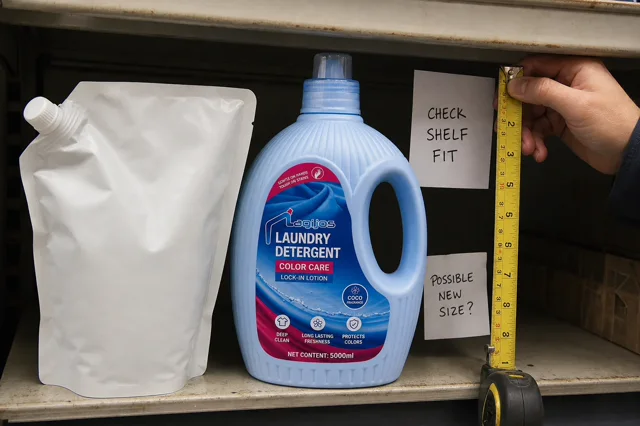
Refill packs can look efficient in a flat artwork file and still behave badly on shelf. Buyers should check height, width, base stability, spout position, hanging or standing requirement, case quantity and whether the pack needs a tray or shelf-ready carton.
Do the same check for the main bottle. If the bottle and refill are meant to sit together, measure them together. Shelf height, front-facing space and barcode position matter to the retailer, and carton marks matter to the warehouse team receiving the shipment.
Review leakage and handling before artwork becomes final
Review cap or spout fit, label readability and carton layout using empty or inert-filled packaging. Ask for qualified performance evidence for the selected filled pack rather than treating a visual sample check as proof of transit or leak resistance.
This is not a lab claim. It is a buyer-side approval habit. Importers should record what they checked and share practical feedback before the supplier prepares bulk artwork, carton marks or packing details.
Leave room for dosage, warning text and local language
Compare the usable print area of the selected bottle and refill design. Reserve space for approved dosage directions, use steps, caution wording, net content, barcode, importer details and required languages before artwork approval.
Do not treat claim wording as decoration. If the pack uses phrases such as eco, refill, recyclable, concentrated or family value, the buyer should decide what evidence or local review is needed before the phrase goes onto the label.
Match documents with the final packaging route
Common laundry detergent document discussions include SDS or MSDS, COA, ingredient declaration, commercial invoice, packing list and carton marks. The exact set depends on the formula route, destination country, retail channel and private-label wording.
If the order includes both bottle and refill formats, keep product names, SKU codes, net content, carton quantities and shipment marks consistent across files. That gives the importer a cleaner order file and gives the supplier fewer last-minute corrections before shipment.
What to send Qiaoshou for a refill packaging review
Send the target laundry detergent bottle size, refill pack idea, destination market, sales channel, order quantity, label language, artwork status, shelf requirement, carton plan, shipment term and required documents.
With that brief, Qiaoshou can review the laundry detergent product, packaging direction, sample checks, label route and export paperwork together. The quotation becomes tied to the buyer’s real range plan instead of a single packaging guess.