
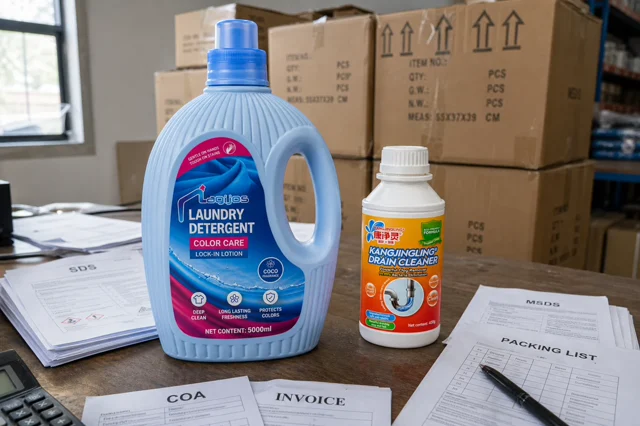
Why inspection should start with the approved sample
A pre-shipment inspection is useful only when the buyer knows what the shipment should match. For cleaning products, that reference is usually the approved sample, final label artwork, carton plan and document list confirmed during RFQ or sample review.
Packaging, leakage and label issues are common reasons buyers review cleaning product shipments carefully before loading. Many problems are not about the formula alone. They appear as loose caps, weak cartons, unclear warnings, label changes, leakage after handling or documents that do not match the packed goods.
Check bottle appearance, cap closure and leakage risk
For liquid detergent, toilet cleaner, drain cleaner and kitchen degreaser, the first inspection pass should look at bottle shape, fill level, cap fit, trigger or closure condition, label placement and any visible damage. Powder jars or cartons need the same basic check for sealing, denting and label alignment.
Leakage review is especially important for drain cleaner, toilet cleaner and trigger-spray products. Buyers should ask how the sample was packed, how cartons protect closures and whether mixed-SKU cartons need extra separation or clearer handling marks.
Read the front label and back label together
The front label should make the use case clear. The back label should leave room for instructions, warnings, ingredients, importer information, barcode placement, batch details and local language. A label can look attractive and still fail a buyer review if the warning area is too small or the barcode sits on a difficult curve.
Claims also need one last check before shipment. Broad words such as antibacterial, eco, child safe, professional strength or certified should not appear unless the buyer has reviewed the support for the target market and retail channel. If the claim changed after sample approval, pause and review the artwork again.
Make carton marks match the packing list
Carton checks are boring, but they prevent real trouble. Product name, SKU, quantity per carton, gross weight, net weight, carton number, destination mark and barcode information should match the packing list and invoice.
This matters more when a container includes several cleaning products. If drain cleaner, grease remover and laundry detergent share one shipment, carton marks should help warehouse staff separate SKUs without guessing. The inspection should catch mismatched labels or cartons before loading.
Review documents before the container is closed
Common document discussions include SDS or MSDS, COA, ingredient declaration, commercial invoice, packing list and carton marks. The exact set depends on destination country, product type, label language and buyer channel.
The document check should happen while there is still time to correct the shipment file. If a batch number, product name, net content or carton count changes, the packing list and related documents should be updated before the container leaves the factory.
What to include in the inspection request to Qiaoshou
A useful inspection request should include the approved sample reference, final label artwork, destination country, carton requirement, SKU list, order quantity, required photos or videos, document list and any retailer-specific checks.
With that information, Qiaoshou can discuss a practical pre-shipment review for the order: product appearance, label fit, carton marks, leakage risk, batch details and documents. The goal is simple. The buyer should know what is leaving the factory before the shipment reaches customs or the retailer warehouse.