
Start with a controlled product identity
A quality file begins before a laboratory result arrives. Record the exact commercial name, intended use, formula or ingredient description, physical form, pack, net content, batch or lot reference, manufacturer, importer and target Russian channel. A phrase such as kitchen cleaner or degreaser is not enough to choose a test plan. The same product family can contain different concentrations, fragrances, closures or intended uses, and each change can affect the documents and review questions attached to the sample.
Rospotrebnadzor’s 20 July 2026 notice says businesses can check whether marking is mandatory by the TN VED EAEU or OKPD code and keep product cards and system data accurate. A separate 7 August 2026 Rospotrebnadzor notice describes the chemical-products technical regulation: it sets mandatory requirements, conformity-assessment rules, identification, packaging and marking, with a main effective date of 1 September 2027 and transition periods. Use those notices as dated controls, not as a conclusion about one cleaner.
Map the test plan instead of asking for a generic certificate
The current Russian regulatory notice describes conformity-assessment and identification rules, but it does not create one universal laboratory checklist for every cleaner. Ask the responsible technical or local regulatory specialist to map the exact formula, concentration, intended use, pack and market route to the applicable evidence. A useful matrix records each proposed check, its purpose, method or standard, sample identity, responsible party, result, report date, acceptance basis and unresolved question.
Turn the answer into a test matrix. For every requested item, record the purpose, method or standard, sample identity, laboratory or responsible party, result, report date, acceptance basis and unresolved question. Mark a field as not applicable only with a reason. If the supplier sends a certificate without the product revision, method, result scope or issuing party, put it in the evidence folder but do not mark the control complete.
Keep label, safety data and results on one revision
The 7 August notice says the chemical-products regulation covers terminology, packaging and marking as well as conformity assessment. The 20 July marking notice points businesses toward product classification codes, product cards and system registration support. Rospotrebnadzor’s 15 April consumer guidance adds the practical label check: composition, purpose, use, storage and precautions. Treat these as separate controls and do not let a marking record stand in for a quality or safety result.
For an importer, those points become document controls. Compare the physical sample, artwork, ingredient information, SDS or safety passport, test report and carton against the same SKU and revision. Check that the intended use and warning language do not exceed the evidence. A result for an earlier fragrance, concentration or bottle is not automatically a result for the current pack. Put the reviewer, date and change decision beside every mismatch.
Treat current regulatory work as a monitoring input
The 7 August 2026 notice says the chemical-products technical regulation has special effective dates and transition periods, with the main regulation entering into force on 1 September 2027. The 20 July notice also describes staged marking duties for selected goods. These are current official control points, not proof that a particular formula is already assessed or marked. Date the source version, ask which transition applies to the exact SKU and obtain qualified Russian confirmation before approval.
Separate three statements in the procurement record: what the official source says now, what a proposal or agenda item discusses, and what the importer has confirmed for the exact product. Do not rewrite a monitoring signal as a certification, approval or market-access conclusion. When a rule, formula, claim or use changes, reopen the test matrix and label review rather than carrying the old answer forward.
Set a buyer release gate before sample approval
A practical release gate has five passes. First, confirm the sample identity and intended use. Second, confirm the chosen tests and their evidence. Third, reconcile label, SDS or safety passport, ingredients, pack and batch information. Fourth, review claims and warnings against the documented scope. Fifth, assign every open item to the supplier, importer, laboratory or qualified local adviser with a date. The result should be a traceable decision, not a folder full of attractive but disconnected certificates.
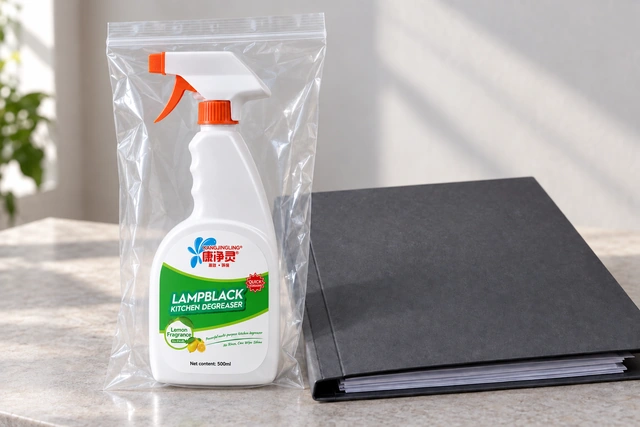
The Kangjingling 500 ml bottle in the image is a packaging reference for this workflow. It does not prove a Russian test result, formula, registration, efficacy, marking status or compliance. The preserved label wording is disclosed because visible marketing text is not evidence for this article. Request the real sample, current document set and a product-specific quality RFQ. If a document belongs to another SKU or the method and result scope are unclear, keep approval pending and record the question.
Article references
These general references support buyer checks. The importer remains responsible for confirming the rules that apply to the final formula, classification and destination market.