
The 2026 change starts with scope, not a product nickname
Russia’s 2026 marking calendar matters to an OEM buyer because a commercial range may contain detergents, cleaning tools, tissue products and personal-hygiene goods under one private-label programme. The Rospotrebnadzor consumer-protection portal’s 20 July 2026 notice describes the staged rules introduced by Government Resolution No. 656. It lists selected household and sanitary-hygiene articles, rather than declaring that every cleaning liquid is governed by the same new date.
The Federal Centre for Hygiene Education of Rospotrebnadzor’s current regulatory notice, last modified 7 August 2026, gives the same boundary: registration for the relevant participants from 1 September 2026, and identification marking plus entry data for selected products from 1 October 2026. Treat those dates as a scope-and-data handoff to verify, not as a blanket artwork deadline for every Kangjingling cleaner. A Russian legal or regulatory specialist should confirm the exact classification and transition case.
Separate established detergents from the new listed groups
The 20 July notice also summarises earlier phases for soap and detergents from 1 May 2025, hair products, deodorants and shaving products from 1 July 2025, and cosmetics and toothpaste from 1 October 2025. That history is useful for an importer building a private-label range, but it does not answer whether a new product is inside the separate groups added by Resolution No. 656. A range name such as household care, hygiene or bathroom cleaning is not a legal classification.
Create one row for each SKU and record product description, formula or material identity, pack type, destination importer, relevant classification codes, marking phase, system registration question, code field and transition treatment. Do not copy the decision from a similar bottle, carton or supplier catalogue. If one shipment combines a degreaser with sponges, tissue or hygiene items, keep separate scope decisions and data owners so a change in one family does not silently alter another.
Turn the rule into an OEM artwork and data brief
Before a supplier starts Russian artwork, add a marking section to the RFQ. Ask the buyer or responsible local adviser to confirm the exact product category, importer of record, applicable dates, required system fields, code placement, label language, barcode relationship, carton configuration and evidence needed for the product record. The factory can provide the physical pack, artwork files and product documents; it should not decide the importer’s legal scope without confirmation.
Lock formula, bottle, closure, label revision and carton marks to one SKU identifier. Add a status for each field: confirmed, supplier response pending, buyer assumption or local review required. A sample that changes bottle geometry, label area or carton count should open a new revision. This prevents a private-label team from approving a visually correct label while the buyer, warehouse and product catalogue still reference a different item.
Use a controlled release gate before sample or replenishment
A practical release review can be run in four passes. First, compare the physical product and intended use with the classification decision. Second, check whether the relevant participant registration, marking or data-transfer date has arrived. Third, reconcile the supplier file, importer master data, warehouse receipt, retailer record and artwork revision. Fourth, document the unresolved point and the person who gave local confirmation. Rospotrebnadzor’s notices are useful official guidance, but they do not replace case-specific legal advice.
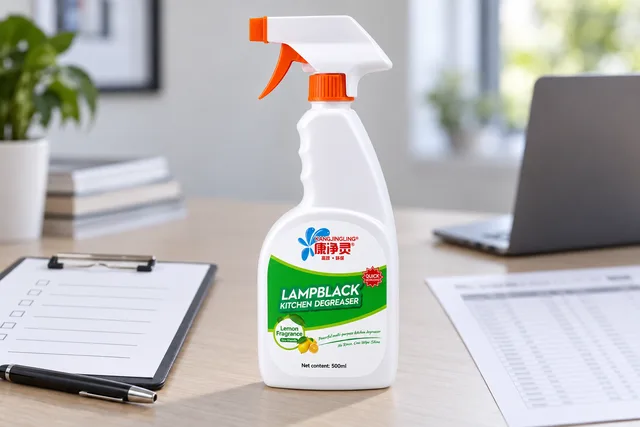
The pictured Kangjingling 500 ml kitchen degreaser is only a procurement example of a real catalogue pack used for an editorial scene. The image does not prove that this product is marked, registered or legally classified for Russia, and the visible reference-label claims are not substantiated here. Request the sample, document pack and OEM quote only after the buyer has stated the target market, quantity, artwork status and required confirmation. If scope remains unclear, pause instead of guessing.
Keep the 2026 dates in the buyer file as dated control points, not as a promise that a supplier has completed a Russian obligation. The notice describes government measures and product groups; it does not validate a particular formula, bottle or imported shipment. Ask the importer to attach the cited rule, classification rationale and transition note to the SKU record. That evidence makes later artwork changes easier to review and prevents a sales team from treating an old catalogue description as a legal decision.
For a first request, send the exact product name, intended use, net content, ingredients or material description, pack photographs, destination, importer details and planned sale channel. Ask for a written reply identifying the responsible marking participant and the data handoff. Keep the commercial quotation separate from the local compliance conclusion. This is a buyer-control method, not a certification of the pictured product or of any supplier's Russian market status.
Official reference sources
These general references support buyer checks. The importer remains responsible for confirming the rules that apply to the final formula, classification and destination market.