
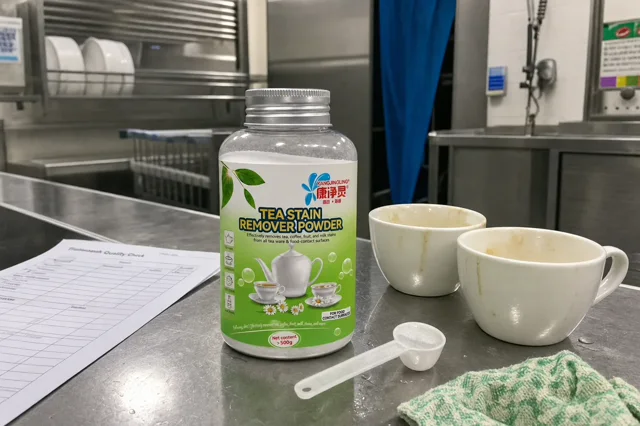
Start with the cups the buyer actually needs to clean
Tea stain remover sounds like a narrow product until a hotel, tea shop, restaurant group or houseware retailer has to keep cups looking acceptable every day. The first sample question is simple: what type of stain and what type of surface will the buyer test?
For an importer, that question belongs in the RFQ. A product for household shelves, catering supply, teaware shops or hotel back-of-house use may need different jar sizes, use wording, carton counts and sample notes. The buyer should describe the use case before asking only for a price.
Check the jar and powder before judging the artwork
A jar label can look clean in a product photo while the real sample still needs review. Buyers should check lid fit, seal condition, powder flow, visible moisture risk, fill level, scoop or measuring habit and whether the label stays readable after normal handling.
This is especially important for private-label programs. If the jar size, cap style or label material changes after sample approval, the barcode area, front claim, use directions and carton count may also need another review.
Make use directions clear without overloading the label
Many customer questions are practical: how do I remove tea stains from cups, can the product be used on coffee cups, and what surfaces should be avoided? The label should leave room for the answer that fits the destination market and sales channel.
The buyer does not need a crowded back panel. They do need space for product name, use steps, caution wording, food-contact surface wording where relevant, net content, importer details, barcode, batch field and local language. Those items should be planned before artwork is locked.
Keep performance language tied to the sample file
Do not turn one tabletop test into unsupported label claims. If the buyer wants words around tea stains, coffee cups, fruit stains, milk stains or food-contact surfaces, those words should match the sample route, market review and files the buyer can support.
A useful sample note can be simple: cup type, stain type, water temperature, dose, contact time, cleaning steps and result observed by the buyer. That gives the purchasing team a better basis for label wording than a generic claim copied into the artwork at the last minute.
Align carton marks and documents with the final jar name
Small jars still create receiving work. Carton marks should identify the product name, net content, pieces per carton, batch or lot field, destination mark and any barcode or retailer code needed by the buyer. This matters when tea stain remover ships with laundry detergent, degreaser, toilet cleaner or drain cleaner in a mixed order.
Common document discussions include SDS or MSDS, COA where applicable, ingredient notes, commercial invoice, packing list, carton-mark approval and label artwork. The exact file set depends on destination country, sales channel and buyer requirements, but the names should match closely enough to trace one SKU from label to carton to document folder.
What to send Qiaoshou for a tea stain remover jar review
Send the destination market, sales channel, jar size, expected order quantity, target use case, label language, private-label artwork status, claim wording, carton requirement, barcode needs and requested document list.
With that brief, Qiaoshou can review the tea stain remover jar, label space, sample check, carton marks and common export documents together. The quotation then reflects the way the buyer plans to test, receive and sell the product, not only the price of a jar.
Official reference sources
These general references support buyer checks. The importer remains responsible for confirming the rules that apply to the final formula, classification and destination market.