
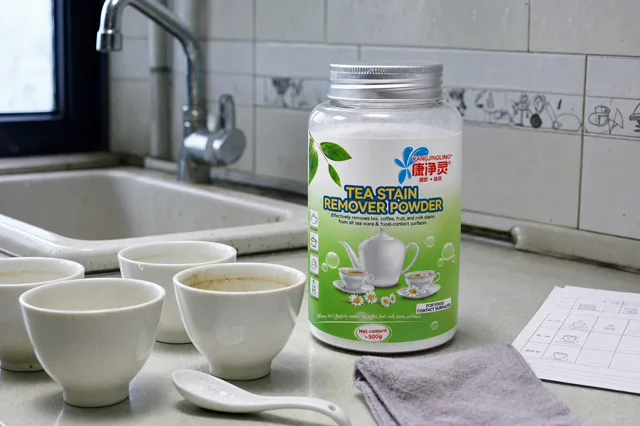
Test the sample in the place where buyers will use it
Confirm the selected formula and approved intended uses before evaluating tea stain remover on cups, teaware or food-contact surfaces. Ask for qualified evidence for the proposed application; the product name or a sample photo does not establish suitability.
For distributors, hotel-supply buyers and private-label teams, the sample check should cover the use case, jar sealing, powder condition, label language, carton plan and document list. Those details decide whether the product can move from a trial SKU to a stable order.
Define the use case before judging the sample
A tea stain remover for household shelves is not briefed the same way as a product for teaware shops, restaurants or hotel pantry cleaning. The RFQ should say whether the buyer cares most about tea cups, coffee cups, ceramic teapots, fruit stains, milk stains or a wider food-contact surface cleaning range.
That use case affects jar size, label wording, usage directions, carton count and the type of sample feedback the supplier needs. If several cleaning products will be sold as one range, mention the role of the tea stain remover beside laundry detergent, degreaser or toilet cleaner early.
Check jar sealing, powder condition and label fit
Powder samples should be reviewed for jar closure, cap condition, visible moisture risk, fill level, label alignment and whether the jar remains clean after normal handling. A sample that looks fine on a product page can still need work if the cap feels weak or the label has no room for local language.
The label should make the product use clear while leaving room for directions, caution text, importer information, barcode placement, batch details and destination-market language. Private-label buyers should send artwork status and label-language needs before treating the sample as final.
Make the cup test practical, not theatrical
For a qualified product evaluation, record the approved procedure, material or surface, formula version and results. Temperature, contact time, rinsing and any food-contact use must follow validated instructions for that product rather than settings chosen for an informal demonstration.
Do not turn a small sample into unsupported performance claims. If the buyer needs claim wording for a label or marketplace listing, that wording should be reviewed against the buyer's own market, retailer rules and supporting files before artwork approval.
Review carton marks and documents while the RFQ is open
Carton marks still matter for a small jar product. Ask whether cartons need product name, SKU, quantity, gross weight, net weight, carton number, destination mark, barcode or mixed-SKU information. This is useful when tea stain remover ships with other household cleaning products.
Common document discussions include SDS or MSDS, COA, ingredient declaration, commercial invoice, packing list and carton marks. The exact set depends on destination country, product route and buyer channel. It is better to request these during RFQ than after production files are closed.
What to send Qiaoshou for a tea stain remover RFQ
Send destination country, sales channel, target order quantity, jar size, label language, artwork status, sample test goal, carton requirement, shipment term and document list.
With that brief, Qiaoshou can review the tea stain remover powder, jar packaging, sample plan, label route, carton marks and export paperwork together. The buyer gets a cleaner quotation and fewer late changes around a small SKU that still needs careful handling.