
Start with the formula and declared use
Thailand market entry begins with a classification question, not a label design. The Thai Food and Drug Administration guidance dated 5 June 2026 explains that cleaning products can fall into different hazardous-substance types depending on active ingredients and intended use. A household or public-health product for cleaning floors, walls, sanitary ware or other materials may be treated differently from bleach, disinfectant or drain-opening products. A commercial name such as kitchen degreaser does not identify the legal route by itself. The importer or local responsible party must match the exact formula, concentration, use instructions and claims to current rules.
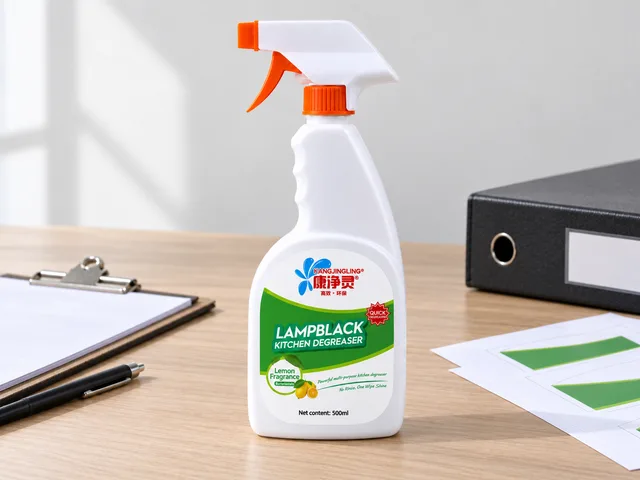
This distinction matters for a private-label buyer because packaging artwork often moves faster than the technical file. Freeze the product revision before translating claims or placing a registration number on a label. Record the active ingredients, their quantities, target use, market entity and person responsible for the Thai review. If formula, fragrance, use claim or pack changes, reopen classification instead of assuming the old answer still covers the new SKU. The catalogue bottle in the editorial image is only a product-format reference; it does not identify the formula or settle Thai status.
Use the Thai FDA checklist as a document map
The official guidance says Type 1 hazardous substances require a product notification before first manufacture or import. It also says Type 2 and Type 3 products generally require a registration certificate before facility permission, subject to stated exceptions. Products distributed in Thailand must have the applicable label and show the relevant product-notification or registration number. These are process descriptions, not a conclusion about the Kangjingling reference or any individual cleaner. Classification still depends on actual active ingredients and the current list.
The same page lists evidence a registration file may need: a form, sale label, ingredient list, manufacturing, packaging and labelling processes, physical and chemical properties, an SDS with GHS hazard classification, and, where applicable, efficacy or active-ingredient analysis results. It also asks for usage recommendations and a product or container photograph. Convert that list into an RFQ checklist with a status column. Mark each item confirmed, supplier response pending, buyer-owned or local review required; never fill an unknown field with a generic certificate or claim.
Re-check list changes and end-use boundaries
DeeMED’s regulatory update, last updated 18 September 2026, explains that Thailand’s eighth hazardous-substance list changed the treatment of hydrogen peroxide and chlorine or chlorine-releasing substances under Thai FDA lists. Its summary says the substances remain controlled and that permitted use and agency responsibility depend on the current list and declared end use. The practical lesson is not that every cleaner changed status. It is that a registration file can become stale when the list, formulation or declared purpose changes.
For a buyer, add a dated list check to the product file. If a product contains hydrogen peroxide, chlorine or a chlorine-releasing substance, ask the responsible Thai specialist to review the current list, product type, declared use and transition treatment. Do not copy the DeeMED summary into artwork as a legal conclusion, and do not assume a household cleaning claim covers industrial bleaching, sterilisation or manufacturing use. Separate sourced background from the case-specific decision that belongs to the importer and qualified local adviser.
Build one controlled label and evidence file
Before an OEM quote is compared, put the physical pack and technical documents on the same revision line. The file should identify the product, active ingredients, net content, pack and closure, label language, intended use, warnings, usage directions and claim wording. Link label artwork to the ingredient list, SDS, process description and any analysis or efficacy report the responsible authority requires. Keep the source date and reviewer beside each decision so a later formula or artwork change can be traced.
Use the image only to discuss packaging format and buyer review workflow. The preserved label includes wording such as Eco-friendly, Quick Degreasing and Lemon Fragrance, but this article does not substantiate those statements. They must not be copied into a Thai label merely because they appear on a reference bottle. Any Thai translation, hazard statement, registration number, pictogram or claim needs its own review. A blank artwork sheet is a useful control surface; it is not evidence that the final label is accepted.
Turn the checklist into a release gate
A practical handoff has four stops. First, the importer confirms the exact formula, active-ingredient data and declared use. Second, the supplier returns the requested technical and packaging documents against the same SKU revision. Third, the Thai responsible party checks classification, label requirements and any registration or notification path. Fourth, the buyer approves a sample and artwork only after open fields are assigned and resolved. If one change alters ingredients, use, warning language, pack size or label claims, issue a new revision and reopen the gate.
Put this structure into the RFQ: request the 500 ml sample, available document pack, current label or artwork status and an OEM quotation, while clearly marking what is confirmed and what remains pending. Ask the supplier to identify documents it can provide and questions that require the importer or Thai adviser. This creates a useful sourcing decision without promising registration, test results, lead time, MOQ or market acceptance. The right outcome is a traceable file ready for local review, not a confident-looking label assembled from a product photo.
Claims need their own evidence
The Thai FDA label guidance published on 10 August 2026 gives a useful warning for artwork review: disinfectant wording is tied to the relevant efficacy evidence, and some wording depends on the organisms and test scope documented for the product. A cleaning-product buyer should therefore separate ordinary cleaning language from disinfectant, sanitizer or virus-kill claims. Do not add a stronger claim to a Thai label simply because a marketing brief or reference image contains it.
When a proposed claim changes the regulatory character of the product, send the exact wording, formula and supporting report to the responsible Thai reviewer. Keep the result, organism scope and label version connected. If the evidence does not support the proposed wording, use neutral instructions or remove the claim until the file is complete.
Article references
These general references support buyer checks. The importer remains responsible for confirming the rules that apply to the final formula, classification and destination market.