
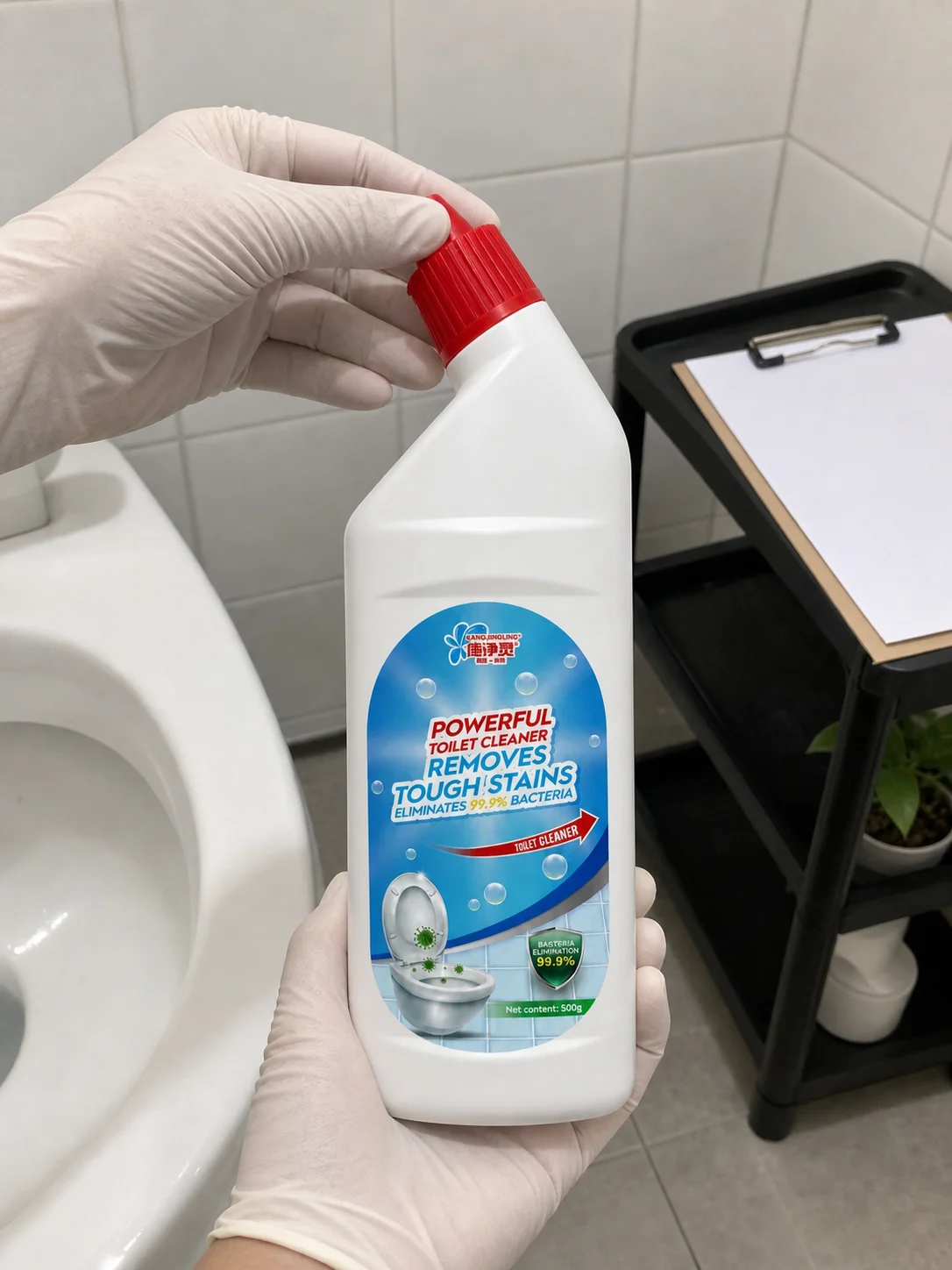
Start with how the bottle reaches the toilet rim
Toilet cleaner buyers often talk about fragrance, stain removal and label design first. The bottle shape deserves the same early review. An angled neck or directional cap can make the product easier to present and use, but only if the real sample feels stable in the hand and reaches the area the customer expects to clean.
Use empty or inert-filled packaging to review neck reach, cap grip and label readability before artwork approval. Do not treat an ergonomic review as evidence of surface compatibility or safe-use directions for the chemical product.
Use customer questions to plan the back label
Search questions around toilet cleaner are practical: how to use it, where to apply it, whether it is suitable for a certain toilet system, how to store it and what warnings matter. The label cannot answer every market question, but it needs enough room for the buyer-approved directions.
Plan that space before the private-label design is locked. Product name, use directions, caution wording, storage note, net content, barcode, importer details, batch field and local language can crowd the same panel quickly. If the destination market needs more warning text, the pack shape and label size should allow for it.
Check cap fit, neck residue and upright storage together
Use empty or inert-filled packaging to inspect grip, label fit and the proposed carton layout. Testing the filled product or closure performance requires a qualified procedure tied to the selected formula and packaging specification.
If the buyer later changes bottle size, cap color, label material or carton orientation, repeat the check. A small packaging change can affect leakage risk, shelf presentation and the document description used in the order file.
Make carton marks useful for mixed cleaning orders
Toilet cleaner often ships with laundry detergent, drain cleaner, grease remover or tea stain remover. The outer carton should help the warehouse identify the SKU without opening every case. Vague names slow down receiving work and make document matching harder.
Before carton printing, align product name, net content, pieces per carton, carton number, batch or lot field, destination mark, barcode or retailer code and any upright-handling note the buyer requires. The carton, label and packing list should describe the same retail pack.
Match the document file with the final pack wording
Common toilet cleaner order files may include SDS or MSDS, COA where applicable, ingredient notes, label artwork, carton-mark approval, commercial invoice and packing list. The exact file set depends on destination country, sales channel and buyer requirements.
The practical rule is simple: keep names consistent enough that the buyer can trace one SKU from bottle label to carton to document folder. If the label says toilet cleaner while the invoice, SDS or MSDS and carton mark use different names, fix the mapping before bulk packing.
What to send Qiaoshou for a toilet cleaner pack review
Send the destination market, sales channel, bottle size, cap or angled-neck requirement, label language, warning wording under review, private-label artwork status, carton requirement, expected order quantity and requested document list.
With that brief, Qiaoshou can review the toilet cleaner bottle, cap, label space, carton marks and common export documents together. The quotation then reflects the pack the buyer plans to receive and sell, not only the bottle price.