
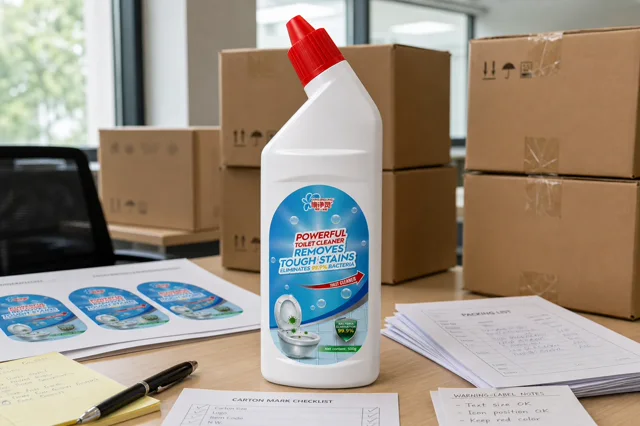
Start with the label and packed bottle, not only the formula
Toilet cleaner is usually briefed as a simple bathroom SKU. In practice, importers still need to review the bottle shape, angled neck, cap closure, warning area, label language, carton marks and document list before a quotation becomes useful.
The formula direction matters, but the order can still run into trouble if the warning panel is too small, the cap protection is weak, the carton marks do not match the packing list or the buyer asks for documents after the artwork is already locked.
Make the front and back label work together
The front label should tell the shopper that this is a toilet cleaning solution and show the main use case clearly. The back label has the harder job: usage directions, caution text, ingredient information, importer details, barcode placement, batch detail and local language all need room.
For private-label programs, buyers should send the destination country, label language, retailer channel and artwork status before sample approval. That gives the supplier a chance to discuss label size and bottle fit before print files become expensive to change.
Check bottle closure and carton protection as one system
A toilet cleaner sample should not be reviewed only as a clean bottle on a table. Check the cap fit, neck angle, fill level, label alignment and whether the carton protects the closure during handling. If the product ships with drain cleaner, laundry detergent or degreaser in the same container, the carton plan becomes even more important.
Ask how cartons will show product name, SKU, quantity, gross weight, net weight, carton number and destination mark. Warehouse teams should be able to identify the toilet cleaner without opening every carton or guessing from a vague packing list.
Review claims and warning wording before artwork approval
Cleaning labels often use short claim words to help the product read quickly on shelf. Those words should still be reviewed against the buyer's market, retailer requirements and supporting files before artwork approval. The safer habit is to mark claim direction early instead of adding new wording at the last minute.
Warning text deserves the same timing. If local language, caution icons, usage steps or importer information require more space, the buyer should know this while the label layout can still be adjusted.
Put the document request inside the RFQ
Common document discussions for toilet cleaner include SDS or MSDS, COA, ingredient declaration, commercial invoice, packing list and carton marks. The exact set depends on destination market, sales channel, product route and importer requirements.
If the document request arrives after production, small changes can become slow. Product name, net content, warning text, batch details and carton count should match the goods that will ship. It is better to review those items before the container is planned.
What to send Qiaoshou for a toilet cleaner RFQ
Send destination country, sales channel, target order quantity, label language, private-label artwork status, bottle or cap requirements, warning-label needs, carton marks, sample checks, shipment term and document list.
With that brief, Qiaoshou can review the toilet cleaning solution, sample route, label fit, carton packing and export paperwork together. The result is a clearer quote and fewer late changes around the parts of the project that buyers usually notice too late.